Arlaya Typeface Review: Elevating Handmade Brand Identity
I was staring at a blank Canva canvas at 2 AM, trying to finalize the branding for my new line of artisanal soy candles. The label design felt flat, missing that "handcrafted" soul I wanted customers to feel before they even lit the wick. That’s when I pulled up Arlaya, a font I had bookmarked months ago but never truly tested in a high-stakes commercial context. As a web designer and product creator who spends half my life tweaking kerning and the other half worrying about print bleed, I needed more than just a pretty typeface; I needed a tool that could bridge the gap between digital mockups and physical reality. After spending the last week testing Arlaya across various mediums—from delicate greeting cards to sturdy tote bags—I’m ready to share how this Script Handwritten gem performs in the real world of handmade business.
Arlaya Dry Brush Font for Candle Labels and Boutique Packaging
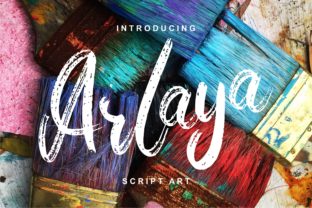
The first thing you notice about Arlaya is its confident, dry brush character. It updates classic calligraphy with a modern twist, giving it an organic, energetic vibe that feels incredibly authentic for handmade goods. When I applied Arlaya to my candle jar labels, the slight texture of the letterforms mimicked the hand-poured nature of the product itself. Unlike rigid serif fonts or overly perfect sans serifs, Arlaya brings a human touch that resonates with buyers looking for authenticity.
In packaging design, first impressions are everything. Using Arlaya as the primary display font allowed me to create a focal point that screamed "premium" without feeling stiff. The font’s natural variation in stroke width adds visual interest even in monochrome black-and-white designs, which is crucial when you’re printing on kraft paper or matte finishes. For boutique tags attached to jewelry or clothing, Arlaya provides enough weight to be legible from a distance while maintaining an elegant, artistic flair. It transforms a simple white tag into a branded experience, suggesting that the item inside is crafted with care and attention to detail.
Arlaya Script Font for Wedding Invitations and Stationery Design
One of the most demanding tests for any creative font is wedding stationery. Clients expect elegance, readability, and a touch of romance. Testing Arlaya for a mockup wedding invitation suite revealed its versatility as a modern typography choice. While it carries the energy of a brush script, it retains the structure of traditional calligraphy, making it sophisticated enough for formal events yet approachable for casual gatherings.
When designing invitations, pairing is key. I found that Arlaya pairs beautifully with a clean sans serif font for the body text, creating a harmonious balance between decorative flair and functional readability. The contrast between the bold, expressive Arlaya headings and the understated simplicity of a geometric sans serif allows guests to easily find the essential details—time, date, and location—while still being swept away by the aesthetic appeal of the header. This combination works exceptionally well for digital downloads and printable wall art as well, offering creators a ready-made solution for elegant home decor prints that don’t require complex graphic design skills.
Arlaya Display Font for Social Media Graphics and Digital Downloads
As a maker, your online presence is your storefront. Whether you are listing on Etsy or posting on Instagram, your graphics need to stop the scroll. I used Arlaya extensively in my social media graphics, particularly for announcing new drops and showcasing behind-the-scenes content. Because Arlaya is a Script Handwritten font with strong visual impact, it commands attention immediately. It turns any design idea into a true standout, ensuring that your promotional posts look cohesive and professional.
For digital downloads, such as planner pages or quote prints, Arlaya serves as an excellent motivational anchor. Its dynamic strokes add movement to static pages, making them feel alive. However, when using Arlaya for longer text blocks, caution is advised. It is best suited for short phrases, names, titles, and decorative wording. Trying to set long paragraphs in Arlaya can fatigue the reader’s eye. Instead, use it to highlight key takeaways or section headers within your digital templates. This strategic use ensures that your products remain user-friendly and accessible, which is a major selling point for busy planners and organizers.
Arlaya Typefor Cutting Machines and Physical Merchandise Production
For those of us who use Cricut or Silhouette machines to produce physical merchandise like shirts, mugs, and signs, font behavior is critical. I tested Arlaya by exporting it as an SVG cut file for vinyl decals. The dry brush style presents some unique challenges for cutting; the thinner hairline strokes can sometimes be fragile if not handled correctly. I recommend scaling up small text elements slightly to ensure durability, especially on curved surfaces like water bottles or tumblers.
On larger formats, such as farmhouse signs or welcome boards, Arlaya shines. Its bold presence fills space effectively without looking cluttered. When applying it to fabric via heat transfer vinyl (HTV) for tote bags or t-shirts, the font holds its shape well, provided you use a stable backing material during application. It’s important to check the included styles, alternates, and ligatures before finalizing your cut files. Some letters may have swashes that extend beyond the standard bounding box, so adjusting the positioning ensures your design doesn’t get cropped awkwardly. Always proof-read your cuts, as decorative fonts can sometimes obscure small details like apostrophes or periods.
Arlaya Commercial Font Licensing and Brand Consistency Tips
Before incorporating Arlaya into your product line, it is vital to review the commercial font licensing terms. If you plan to sell physical products, templates, or digital downloads featuring this font, ensure your license covers the intended volume of sales. Many premium fonts allow for unlimited personal projects but restrict commercial use to a certain number of end products. Understanding these boundaries protects your business from legal issues and supports the type designers who create these assets.
Maintaining brand consistency is another area where Arlaya excels. Once you establish it as your primary voice, using it across all touchpoints—from your website header to your shipping stickers—creates a recognizable identity. Customers begin to associate the specific flow and personality of the letters with your quality and style. This emotional connection fosters customer loyalty and recognition. By combining Arlaya with complementary design elements and adhering to clear usage guidelines, you can build a cohesive brand ecosystem that feels both professional and deeply personal. Ultimately, Arlaya is more than just a collection of glyphs; it is a versatile tool that empowers makers to communicate their unique story with clarity and charm.